All notes — jump to
POV: Your daughters upgraded you from Appa to Bro
POV: My daughters upgraded me from Appa to Bro.

POV [Point Of View — a Gen Z storytelling format meaning: imagine yourself in this exact situation] — I am a 46-year-old man who built companies across two countries, survived cashflow crises, and once sold his wedding ring to start a business.

And my daughters have stopped calling me Appa.

They call me Bro.

"Bro, did you eat my snacks?"

No cap [no lie, I am completely serious, this is not an exaggeration] — I did not see this coming. I changed diapers. I did school runs. I slayed [performed exceptionally, gave maximum effort, executed like a champion] the entire dad thing. FR FR [for real, for real — used for extreme emphasis when regular "for real" is not enough].

And then one Tuesday, my daughter looked me in the eye and said "Bro." Not Appa. Not Dad. Not even the slightly alarming "Father." Just — Bro.

I was today years old [a phrase meaning: I only just discovered this, even though it has apparently been true for some time] when I realised my title had been changed without a meeting, a memo, or even a basic vibe check [an informal assessment of someone's energy, mood, and general presence].

I lowkey [secretly, quietly, without making a scene] stood there processing. Had I been demoted? Promoted? Is Bro a W [a win, a positive outcome] or an L [a loss, a failure, something to be embarrassed about]?

The whole situation was giving [had the energy and vibe of, reminded me strongly of] a performance review I did not ask for.

Then my daughter explained — and I quote directly — "Appa is so mid [mediocre, average, uninspiring, nothing special]. Bro is more slay [impressive, excellent, worthy of admiration]."

I built companies. I survived Singapore. I am apparently mid.

Ngl [not gonna lie] — I felt gaslit [manipulated into questioning my own reality and identity]. I checked old birthday cards. Appa. I checked the fridge drawings from ten years ago. Appa. The name saved in their phones? I am too scared to look.

— Now. For all of us born in the 80s and 90s —

We grew up. Got jobs. Had kids. Thought we understood the assignment [did exactly what was expected, executed the task perfectly]. We were so based [authentic, self-assured, admirably unbothered by what others think].

Then our children — our Gen Alpha [born after 2013, currently living rent-free in a completely parallel universe] children — started speaking a language that technically shares an alphabet with English but has absolutely no overlap in meaning.

"It's giving main character energy" [acting as if you are the protagonist of your own movie, the dramatic centre of every situation] — I thought this was a compliment. Apparently when applied to a 46-year-old man, it is sus [suspicious, questionable, something is off].

"He lives rent free in my head" [I cannot stop thinking about this person, they occupy my mind without paying any mental rent] — I pay a mortgage. I found this unfair.

We are out here fully delulu [delusional, completely out of touch with reality] about our own coolness. We thought we were relevant. We were giving NPC energy [Non-Player Character — a background figure in a video game with no real depth, purpose, or storyline] without knowing it.

We were the NPCs. The whole time.

— But here is my actual concern —

My daughters are Gen Alpha [the generation born after 2013 — currently in school, already operating on a frequency the rest of humanity cannot access without a decoder ring]. Gen Alpha already needs subtitles.

I thought Gen Z was confusing. Then my daughters arrived, and Gen Z now feels like a perfectly reasonable dialect by comparison.

Gen Alpha vocabulary includes skibidi [from a viral YouTube series — now used to mean anything from cool to chaotic to cursed, entirely depending on context and tone of voice], rizz [natural charm and charisma — the ability to attract without effort; either you have it or you don't], and sigma [the lone wolf archetype — self-sufficient, unbothered, needs zero external validation]. Used together, in one sentence my daughter actually said to me:

"Appa is fully skibidi sigma Ohio rizz, no cap."

— My daughter. To me. About me. I have re-read this fourteen times. I still do not know if it was a compliment.

And I simply nodded. Smiled. Pretended I understood. Because what else is there to do.

Gen Alpha is already a different civilisation. I will need a translator, a decoder ring, and possibly therapy. I am not even going to think about what comes after Gen Alpha.

The gap between generations has always existed. But I genuinely believe we — the 80s and 90s children — are the last generation who will even partially understand our grandchildren. The ones after us? They are on their own.

As for me — I have accepted the rebrand. Call me Bro. Call me Appa. Call me mid. I built this family from nothing, I am still here, and I am still the one paying for the snacks they accuse me of eating.

That's a W [a win]. Lowkey.

What this might mean for you

If you were born in the 80s or 90s and you have children — you already know. The confusion is real. The language barrier is real. And the love underneath all of it is also very real, even when it arrives addressed to "Bro."

What is the most Gen Z thing your child has ever said to you that left you completely blank? I promise you are not alone. We should start a support group. For parents who are mid, apparently.

We need one. Periodt [period — end of discussion, absolutely final word, no further debate will be entertained].
Back to top
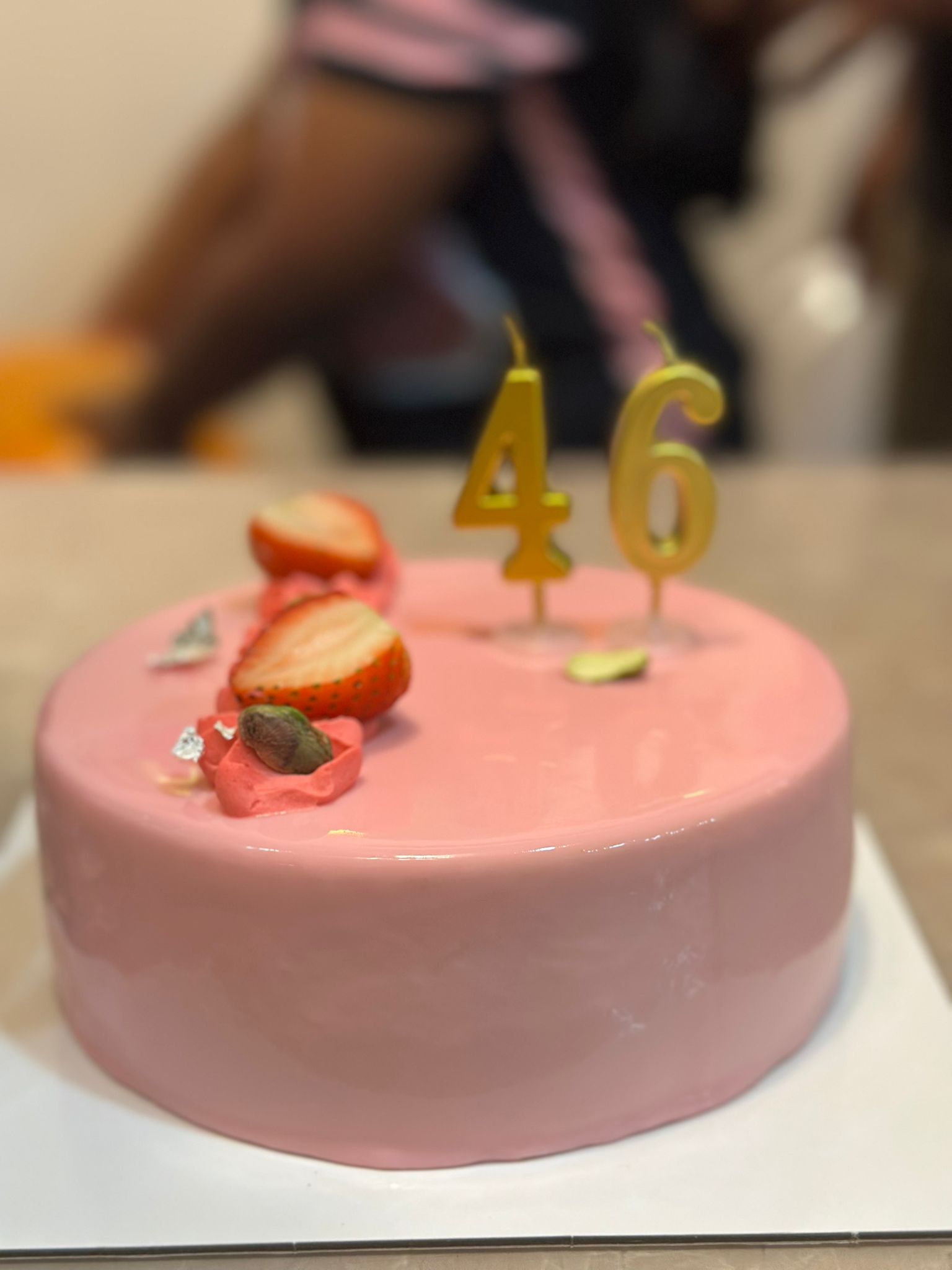
Birthday — 22 May 2026
Some people are just givers.

Yes — today is my birthday.

And as usual, there are hundreds of messages flooding across my WhatsApp groups. Phone calls from employees, from parents, from siblings. In-person wishes at home — hugs and kisses from my spouse and kids, the kind that make the whole morning feel warm before it has even properly started.

There is a particular kind of beautiful chaos that comes with birthdays. Everyone means well. Every message carries something genuine. I am grateful for all of it.

But of all this commotion, one message stops me.

A simple note. No fanfare. No voice note, no gif, no cake emoji parade.

"Happy birthday Ganesh.. Hope you are having a great day and wish you a wonderful year ahead."

From my dear friend Siva Prahas.

I got the exact same birthday wish from him on 22 May 2025. And the year before that. And the year before that.

That is what stopped me. Not the message itself — but the realisation of who it came from, and what it represents.

I have known Siva since Class 6. 1992, to be precise.

We went to different classes from Class 10. Different colleges after that. Different careers. Different cities. Eventually, different countries.

Life pulled us in completely separate directions — the way it does with most school friends once the years start moving fast.

But every single year, without fail, Siva sends me a birthday message. Promptly. On the day. Not a day late. Not a forwarded group message. A personal note — simple, warm, meant for me.

Thirty-three years of friendship. Thirty-three birthdays. Not one missed.

We don't speak every week. We don't have long calls or regular check-ins. Our conversations are occasional — sometimes months apart, mostly customary. The kind of friendship that exists quietly in the background of a busy life.

And yet, he never forgets.

I have spent time genuinely wondering what he is made of. Because this is not easy. Life is noisy. Everyone is busy. Remembering to wish someone — and actually doing it, on time, every year, across decades — takes something that most of us simply do not have enough of. Intention. Follow-through. The kind of quiet consistency that does not ask for anything in return.

Siva has it. In abundance.

Now here is the part I am not proud of.

His birthday is the 14th of February.

Valentine's Day. The one day of the year that is impossible to forget. The universe practically hands you the reminder. And last year — I missed it.

No excuse covers this. I am not going to offer one.

He wished me on mine. I missed his. That sits with me.

Some people give consistently for decades and never once keep score. Siva is one of them.

This post is for him. Publicly, on the record.

Siva — I have not always said this clearly enough, but I value your friendship more than these occasional conversations suggest. You are one of those rare people who gives without calculation. Who remembers without being reminded. Who shows up — quietly, reliably — across thirty-three years of life pulling us in different directions.

That is not nothing. That is everything.

I will not miss February 14th again.

சங்கு சுட்டாலும் வெண்மை தரும்;
கெட்டாலும் மேன்மக்கள் மேன்மக்களே.

Sangu suttalum venmai tharum;
kettalum men makkal men makkalye.

— Tamil proverb

A conch shell, even when burnt, still yields white. Noble people, even when circumstance strips everything away, remain noble.

Siva is that kind of person. His character does not depend on conditions. It just is.

What this might mean for you

Think about the people in your life who show up quietly and consistently — the ones who remember, who reach out, who give without keeping score. They are rare. And most of us, myself included, do not thank them nearly enough.

Who is your Siva Prahas? And when did you last tell them what they mean to you — not in passing, but properly?

This might be a good day to do that.

Back to top
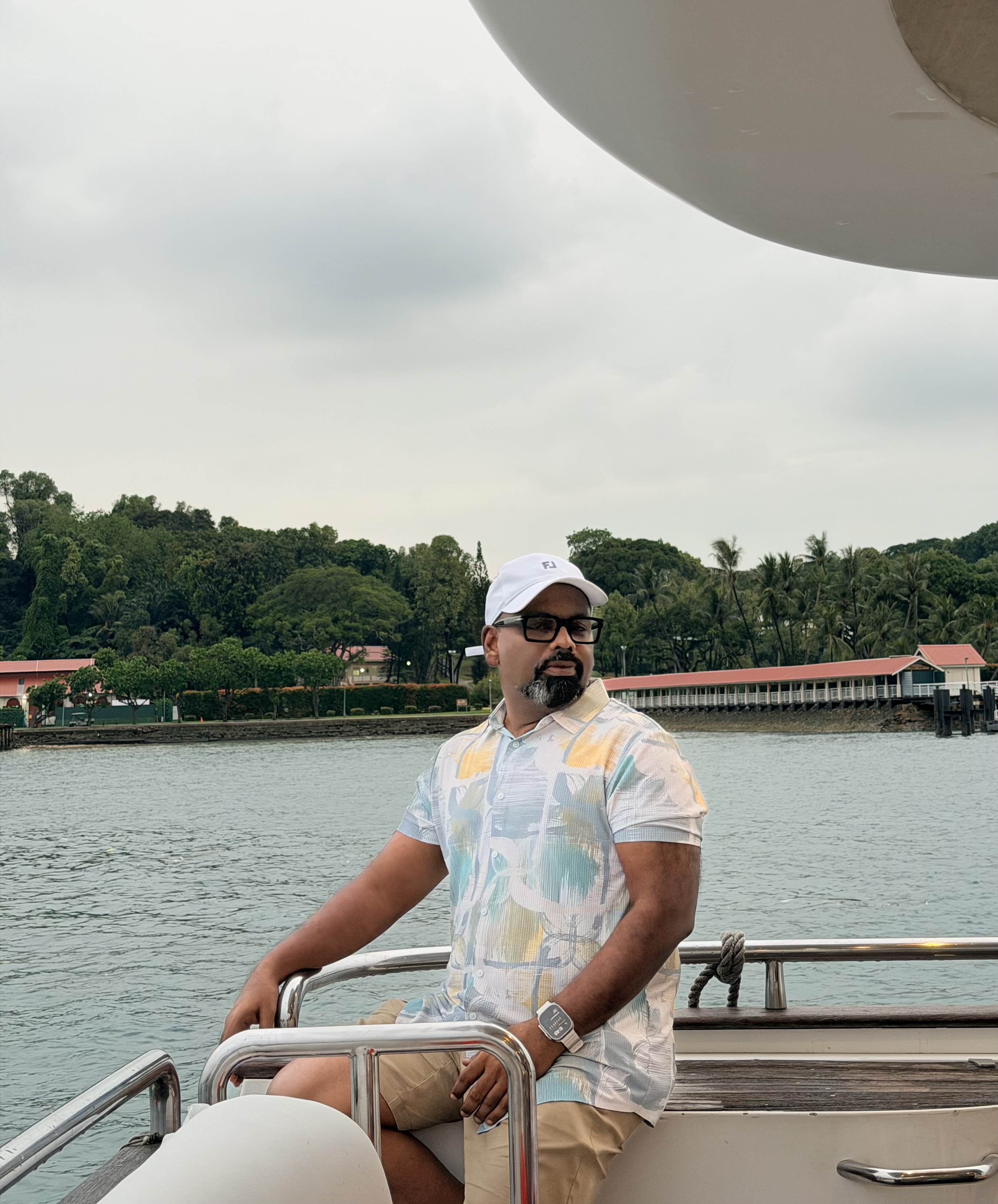
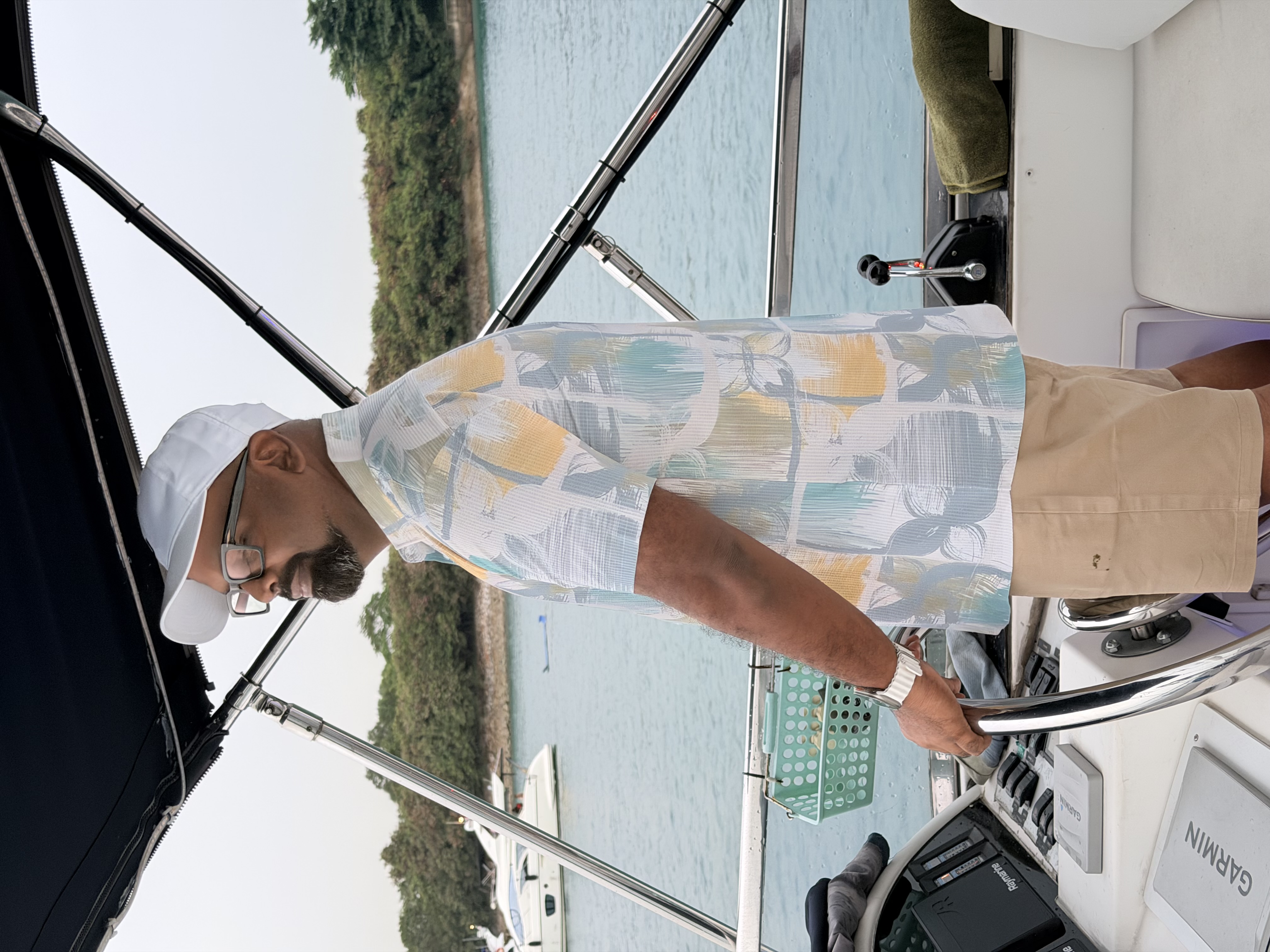
At the helm — Singapore waters
The yacht and the big ships.

A few weeks ago, I was on a yacht with family.

A celebration. Everyone laughing. Food, music — the kind of afternoon that feels like a pause button on life.

I was sitting at the stern, looking out.

Because on the horizon — Singapore's high seas — there were big ships. Massive. Moving slowly. Going somewhere.

I remember thinking: is the yacht a place to stay, or a place you leave from?

Nobody was asking that question. The party was happening. The water around us was calm and clean and safe.

The ships on the horizon didn't care.

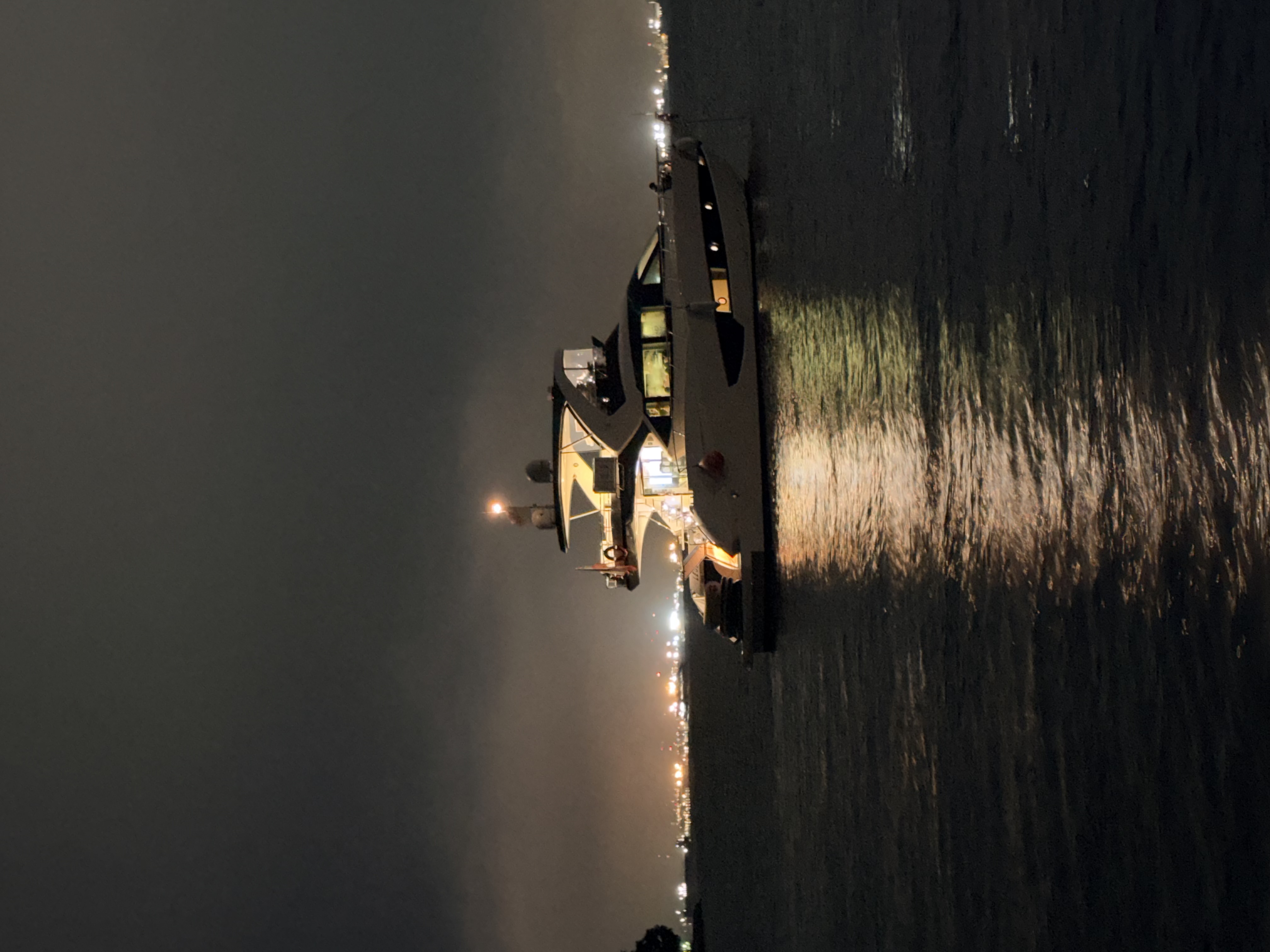
Singapore waters at night
Singapore Strait, late evening

That moment stayed with me.

Then last weekend, I was reading Verne Harnish's Scaling Up and found a poem tucked inside — written by Daisy Rinehart, over a hundred years ago.

I'm tired of sailing my little boat
Far inside of the harbor bar;
I want to be out where the big ships float —
Out on the deep where the Great Ones are!

And should my frail craft prove too slight
For storms that sweep those wide seas o'er,
Better go down in the stirring fight
Than drowse to death by the sheltered shore! — Daisy Rinehart

I put the book down.

She had seen the same horizon.

The yacht is beautiful. The yacht is where the people you love feel safe. The yacht is everything most people work their whole lives to afford.

But the big ships aren't at anchor.

They're moving. Carrying weight. Going somewhere that requires navigating open water — not staying inside the bar.

I know which one I'm built for.

The hard part isn't the deep water.

The hard part is leaving a good party on a calm afternoon.

What this might mean for you

Most of us have a yacht. It looks different for everyone — a stable job that pays well, a business that's comfortable enough, a life that's good by every visible measure. There's nothing wrong with the yacht. The question is whether you've ever asked yourself: is this where I'm meant to stay, or is this where I'm meant to leave from?

You don't have to have an answer. But I think it's worth sitting with the question on a calm afternoon — before the horizon makes the decision for you.

Back to top
The honest truth about being a founder
The honest truth about being a founder.

Nobody tells you the whole story. They show you the cap table, the press coverage, the "we just closed our Series A" announcement. They don't show you the Sunday night at 11pm when you're staring at a cashflow sheet wondering if you've made a catastrophic mistake.

I've been building companies for a while now. And the honest answer to "is it worth it?" is: it depends entirely on who you are.

What's genuinely good about it. The freedom is real. Not the freedom to do nothing — the freedom to decide. You choose the problem, the people, the pace. When something works, the satisfaction is yours in a way that a salary never quite captures. You also learn faster than anywhere else. Not because you're smarter, but because the consequences of being wrong are immediate and personal. That sharpens you quickly.

And there's something quietly meaningful about building something from nothing. A product that didn't exist. Jobs that weren't there. A customer whose problem you actually solved. That feeling doesn't get old.

What people don't say out loud. The uncertainty is constant. Even when things are going well, you're carrying the weight of what might go wrong. Payroll, pipelines, people problems — it doesn't stop. Most of the decisions land on you, including the ones with no good answer.

It's also lonely in a specific way. You can talk to your team, your investors, your spouse. But none of them are quite in the same position. The founder's chair is a strange seat to sit in.

And the timelines are brutal. Things take longer than you expect, cost more than you planned, and require more of you than anyone told you upfront.

So why do it? Because the alternative — wondering what would have happened if you'd tried — costs more in the long run. At least that's how it works for me.

This is not a motivational post. It's just what I've found to be true.

What this might mean for you

If you're thinking about starting something — read this again, slowly. Not as a warning and not as encouragement. As a mirror. Are you doing this because you genuinely can't imagine not doing it? Or because the idea of it sounds better than what you have now? Those are two very different starting points, and they lead to very different outcomes.

If you're already in it — you already know everything I wrote here. The only question that matters now is whether you're still learning faster than you're losing. As long as the answer is yes, you're fine.

Back to top
I want to be a banyan tree
I want to be a banyan tree.

A friend asked me what makes me feel satisfied. Machi, thanks for the question da. I had to sit with it for a while before I could answer honestly.

I used to think about this many years ago — and that is actually the exact reason I gave up my job and jumped into business. My honest answer? I am not built for accomplishment in the traditional sense.

You know where I started. You remember Saidapet da. After coming to Singapore I was still riding a bicycle. Today I drive a Defender. For years I kept setting small goals, achieved them, and the excitement was gone in a few days. Right now I am chasing a name board on a tall Singapore building and a 100 million valuation. I don't know if I will fully get there — but I am positive I will reach somewhere close. Will those things make me feel accomplished? Honestly, no.

What this question made me realise is this: I want to build something that outlasts me by 100 years. A self-sustaining institution that runs with honesty and creates real value for people long after I am gone. That is what I want to be remembered for.

But here is the thing — I actually feel accomplished even today. I am already living my mission.

OKO products — people buy them, use them, appreciate them. My renovation work carries a 4.8-star rating. My co-living gives 160 rooms to people at affordable prices, where they live with full dignity and freedom — cook what they want, live how they want. 1,500 renovation projects done. 3,000 tenants served. Over 10,000 retail customers using OKO. Next year all these numbers will be more. The year after, more again.

My mission has no finish line.

I want to be like a banyan tree — large, stable, eternal. Giving shade and shelter to as many people as possible. Right now I am a banyan seed. But I know what I am becoming.

Your question helped me write this out clearly for the first time da. Thank you for asking. Genuinely.

What this might mean for you

Machi asked me what makes me feel satisfied. It sounds like a simple question. It isn't. Most people — if they're honest — have never fully answered it. We chase titles, numbers, milestones. We hit them. The feeling lasts a few days. Then we're already looking at the next one.

What would make you feel satisfied — not for a week, but for a lifetime? Not what your parents wanted, not what looks good on paper. What would you build, do, or become — if the only measure was whether it felt genuinely meaningful to you?

Sit with that question. The answer you find might surprise you. It surprised me.

Back to top
The whole story — how Adobha began
The whole story.

I almost did not write this.

I kept asking myself — what is the point? Who needs to read about my struggles? What good does it do anyone to know that I once borrowed money for my child's delivery, or that I sold my wedding ring to start a business?

I sat with that question for a long time.

Then I realised — this post is not for strangers. It is not for inspiration. It is not to build a brand or tell a story.

It is for the people who showed up when I had nothing. Who gave without asking. Who believed without evidence.

They deserve to be thanked by name, in public, on the record. That is the only reason this exists.

So here is the whole story. For the first time.

June 2003. Chennai. Fresh out of college.

I launched chennailisting.com — a classifieds and ads listing website. I thought the idea was good. It probably was. Nobody came.

Three months learning recruitment at a firm. Then I borrowed ₹1 lakh from my father.

With interest.

He was not joking. He believed in me. But he was not going to let me be careless about borrowed money — even his own. That loan had terms. I respected that. I still do.

Started GR Consulting. Ran out of cash by December 2004.

Got a job. Got headhunted. Moved to Singapore and worked for Nucleus Software as HR Executive.

Came back to India. Tried again.

Could not even afford a bike to get around.

In Chennai, a bike is not just transport. It is how you show up — to meetings, to clients, to the world. Without it, you are invisible in a way that is difficult to explain unless you have lived it.

A friend named Viswanathan gave me his.

No questions. No conditions. No timeline for returning it. Just — take it.

I have never forgotten that moment. The bike was transport. But what he actually gave me was something that cannot be borrowed or bought. He gave me my dignity back when I had nothing left to offer in return. That is the purest form of belief one person can show another.

Four more years of struggle. Back to Singapore. A crafts business. 2011.

Failed. 2013.

Ten years. Six attempts. Two countries. Nothing worked.

But life did not pause for any of it.

In 2011, a woman agreed to marry me — knowing exactly what she was signing up for. A man with big dreams and a growing list of failures. No stable income. No clear path forward.

She said yes anyway.

After marriage, the struggle did not stop. If anything, it deepened — because now it was two of us carrying it.

Through all of it, she kept quiet. Not the quiet of someone who has given up — the quiet of someone who has decided. She had chosen this life, chosen this man, and she was not going to make it harder by adding her fear to mine.

She let me pursue my dreams. Every single time. Without condition.

I still think about one afternoon in Bukit Gombak, Singapore.

We were standing outside a bakery. Not browsing. Calculating.

One large cookie for 80 cents. Two smaller ones for $1.20.

We stood there and genuinely thought about it. This was not a joke. This was our budget.

We bought the one cookie for 80 cents. We split it equally. We went home to our common room — $600 a month rent — and that was our afternoon.

Today I manage 200+ rooms.

But I have never forgotten standing in front of that bakery. I hope I never do. That memory is more valuable than any number on a balance sheet.

I have spent years trying to understand what her yes cost her — and what it made possible. I am still not sure I fully understand it. But everything I have built stands on that yes. And on her silence. And on her strength.

Our first child came in 2013.

I borrowed money from friends for the delivery.

That same year — with nothing left in any conventional sense — I had one idea. Not from market research. Not from a business plan or a consultant's deck.

From my own life.

I could not afford a full apartment in Singapore. If I needed affordable, dignified housing — others did too.

I sold my wedding ring. That was the starting capital for Adobha.

A close friend believed before anyone else did. He stepped in with funds and joined as co-founder to make Adobha happen. He moved on later — life takes people in different directions — but that early belief and support made everything after possible.

He knows who he is. And he knows I have not forgotten.

Co-living was not a strategy.

It was a solution to my own problem.

It worked.

Today — four companies. Two countries.

160+ co-living rooms in Singapore. 1,000+ retail outlets across India. A coconut farm programme just beginning.

But the number I think about most is three.

One team member bought his first bike — the same thing that once defined my own dignity on the streets of Chennai.

Another could afford to have twins — children he might not have been able to bring into the world without the stability we built together.

A third sends both his children to a good school — giving them a foundation he never had himself.

These are the numbers that matter. Not the room count. Not the valuation.

Every founder who accomplishes something is not done by themselves.

They have the grit to keep going — but it is the people around them who feed that grit. The friends who lend without conditions. The spouse who says yes without guarantees. The co-founder who believes before there is anything worth believing in. The team members who show up every day and make the mission real.

To my wife — thank you for saying yes. Everything I build is built on that yes.

To Viswanathan — you know what the bike meant.

To my friends who believed in me. To the co-founder who stepped in when it mattered most. To everyone known and unknown who helped along the way — thank you. You built this with me.

You just did not get the credit. Until now.

What this might mean for you

If you are at your own 2004 moment — out of cash, out of ideas, wondering if you called it wrong — this is not the time to go quiet. This is the time to find your people.

Not investors. Not mentors. People. The ones who will lend you a bike with no questions. The ones who will say yes when the numbers say no. Those people exist in your life right now. The question is whether you are letting them in.

And when you get through it — and if you keep going, you will — remember who fed your grit. That debt is the only one worth carrying forever.

Back to top